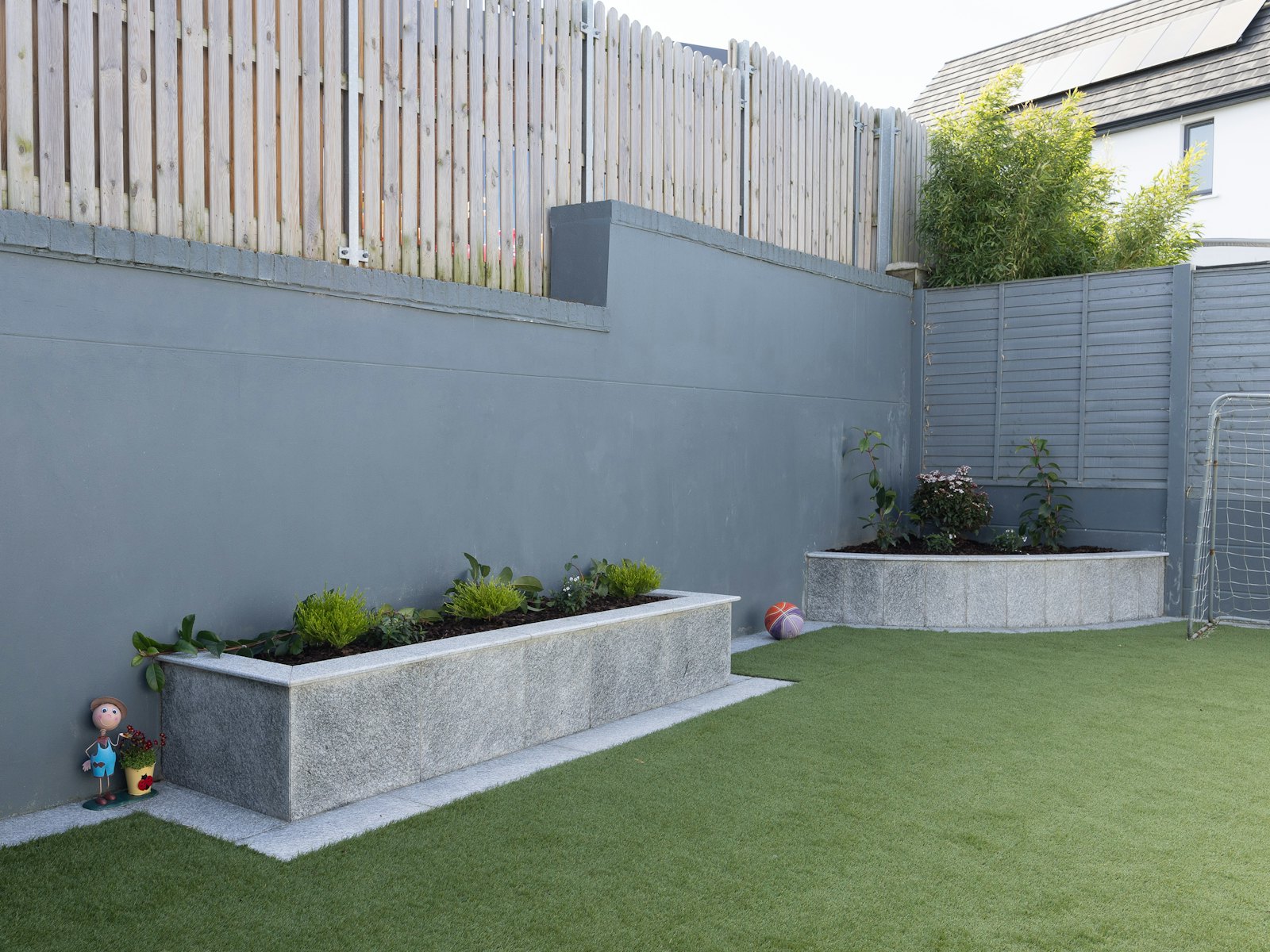
Artificial turf installation in Goodyear, AZ
A Bermuda lawn in the Phoenix area needs more than 40 inches of water a year, and more than 55 if you overseed in winter, according to the Arizona Municipal Water Users Association. We get about 8 inches of rain. That gap is why so many Goodyear homeowners are swapping grass for artificial turf: no mowing, no overseeding, no brown patches in July and a water bill that drops for good.
Turf only looks and drains like it should if the job underneath is done right. Most of the work in a good installation is the part you never see. This page walks through how a proper install is done in Goodyear soil and heat, what it costs, and what to ask before you sign anything.
What a proper installation includes
1. Measure, design and samples
Every job starts at your house. The installer measures the area, checks how water drains off your lot, looks at sprinkler lines and access through side gates, and brings samples so you can see and feel the turf in your own light. You’ll get a written price for the exact square footage, not a guess from a photo.
2. Remove the old grass and soil
Existing grass, roots and the top 3 to 4 inches of soil come out. Sprinkler heads in the turf area are capped, and drip lines for nearby trees and plants are rerouted so they keep getting water. If your Bermuda is aggressive, a weed barrier goes down before the base.
3. Build the base
The base is the most important part of the install. Crushed granite or decomposed granite is spread, graded so water runs away from the house, then wetted and compacted with a plate compactor. A good base keeps the turf flat for years and lets water and pet urine drain straight through. A bad one leaves puddles, dips and smells.
4. Lay, seam and secure the turf
Turf comes in rolls about 15 feet wide, so most yards need seams. Rolls are laid with the grain running the same way, glued on seaming tape so the seams disappear, and pinned along the edges with nails or staples every few inches. Edges are tucked against borders, pavers and concrete so nothing lifts.
5. Infill and brush
Infill is sand or a coated granule brushed down into the blades. It weighs the turf down, helps the fibers stand up and protects the backing from the sun. In Arizona, the right infill also matters for heat and pet odor. See our guide to how hot artificial turf gets in Goodyear for the options.
Choosing turf for West Valley sun
Not every turf is built for 115-degree afternoons. When you compare products, look at:
- UV stabilization. Turf without it can fade and turn brittle in a few summers. UV-stabilized turf commonly lasts 15 years or more.
- Face weight and pile height. Heavier, denser turf feels softer and holds up better to kids and dogs. Shorter pile is easier to clean and better for pets.
- Backing and drainage. Fully permeable or well-perforated backing drains faster, which matters for monsoon storms and for dogs.
- Blade shape. Some blades are shaped to reflect more light and stay a bit cooler or stand back up after foot traffic.
- Warranty. A typical setup is a manufacturer warranty of around 10 years on fading and fiber loss, plus a separate workmanship warranty from the installer, often one to two years. Ask for both in writing.
What artificial turf costs in Goodyear
Public cost guides for the Phoenix area put installed artificial turf at roughly $8 to $16 per square foot, with most projects landing around $11. Pet-friendly upgrades usually add $2 to $4 per square foot. Angi’s data for Goodyear projects shows a typical total of about $2,500 to $7,200. Your price depends on:
- Square footage and how many cuts and seams the layout needs
- How much old grass, rock or soil has to be hauled away
- Access: a wide side gate is faster than carrying everything through the house
- The turf product, infill and any pet drainage upgrades
- Extras like borders, pavers or a putting green
The Goodyear artificial turf cost guide breaks this down with sample yard sizes.
Front yards, backyards and pool areas
Backyards are the most common job: a clean green area for kids and dogs next to the patio. Front yards often mix turf with desert plants and rock so the house still fits the neighborhood look, and most HOAs review front yard plans. Pool areas use turf along the deck edge for a softer look, with a product that handles splash-out and chlorine. If you live in an HOA community like Estrella, Palm Valley or Canyon Trails, read our guide to Arizona HOA rules on artificial turf before you submit your plan.
When to schedule
Installers in the West Valley are busiest in spring, when everyone wants a finished yard before summer. Fall and winter installs are easier on the crew, the base compacts well in cooler weather and you’ll have it ready for the next hot season. If you’re also replacing a lawn for water savings, check with Goodyear Water Services first about any current conservation rebates. See water savings and rebates in Goodyear.
Questions to ask any installer
- How deep is the base, and what material do you use?
- Do you put down a weed barrier?
- How are seams glued, and how are the edges secured?
- What infill do you use, and how much per square foot?
- What warranty covers the turf, and what covers your workmanship?
- Do you handle the HOA submittal, or do I?
Call (623) 000-0000 to talk to a local installer and set up a free measure. You’ll get samples in hand and a written price before any work starts.
Common questions
How long does artificial turf installation take?
Most Goodyear backyards of 500 to 1,000 square feet take one to three days once materials are on site. Bigger yards, tight access or a lot of old grass and roots to remove can add a day.
Do I need to kill my grass before turf goes in?
No. The crew removes the existing grass and roots along with the top few inches of soil. Some installers spray Bermuda a couple of weeks ahead because it spreads by runners, and a weed barrier goes down under the base.
How long does artificial turf last in Arizona?
About 10 to 15 years with basic care is a fair expectation for good, UV-stabilized turf in the Phoenix area. Cheap turf without UV protection can fade and break down in five to seven.
Will weeds grow through artificial turf?
Rarely, if the base and weed barrier are done right. When it happens it’s usually at the edges or seams, and the fix is pulling the weed and resealing the edge, not replacing the turf.